


Are We Civilized?
Updated: Oct 25

When progress, power, and human dignity collide
By Carla Rodney | Grandma Knows Best
Yesterday I saw a video someone had taken of a homeless person sleeping on the TTC. What bothered me was not the sleeping. It was the comments. People were complaining that there weren’t enough constables to get people like that off the train. Really? Someone has nowhere to sleep, and what comes to mind is getting rid of them? Why wouldn’t our first thought be that this person needs somewhere safe to go?
Maybe that train was the safest place they could find. I don’t know. Neither do the people commenting on a video. But I know what I didn’t see in those comments: much concern about why a person might have to sleep there in the first place.
The person without shelter becomes the problem. Not the absence of shelter. The person sleeping becomes the disturbance. Not the conditions that have made sleep a public struggle. And the proposed solution becomes removal rather than relief.
So I ask: Are we civilized?
What are we calling progress?
What if much of what humanity celebrates as great intellectual progress is actually humanity trying to explain, justify, correct, or survive its own uncivilized behaviour?
We have sophisticated economies, universities, technologies, legislatures, law courts, and human rights institutions. We have built elaborate systems for naming injustice, investigating it, regulating it, and responding after it happens. But if our institutions are so advanced, why do so many people still spend their lives trying to secure the most basic conditions for human dignity?
Why did anyone have to debate whether women were intellectually equal to men? Why did enslaved people and their descendants have to fight to have their humanity recognized? Why do people continue to defend the right to shelter, food, safety, and a life without discrimination? I do not ask because thoughtful debate is inherently bad. I ask because the existence of certain debates tells us what a society has been willing to question about other people’s humanity.
We seem to have mistaken being organized for being civilized. We build expensive condos, universities, hospitals, and financial districts. Then we put barriers in the way of people who need somewhere to sit, sleep, wash, or simply exist. What exactly are we celebrating?
The price of being human
We don’t want homeless people in our buildings. We don’t want them using our bathrooms. We don’t even want them sleeping on park benches, so we change the benches. We object to tents because they spoil the view. But where, exactly, are these people supposed to go? It is as though the people with the least are the ones expected to disappear so that everybody else can feel comfortable.
These are not merely abstract questions. In a March 2023 investigation of Toronto’s 2021 encampment clearings, Ombudsman Toronto found that the City prioritized speed over residents’ needs, failed to adequately plan necessary supports, and produced significant unfairness. The official process did not make the experience humane simply because it was official. [1]
I also wonder about the path from poverty into policing and incarceration. Homelessness is not itself proof of criminal conduct, and it would be inaccurate to claim that most people in prison are there because they lack housing. But Canadian research has examined the repeated police contact experienced by people who are homeless, including people living with mental illness. That relationship deserves attention before calls for more enforcement are accepted as answers to homelessness. [2]
If being civilized requires somewhere to live, somewhere to wash, somewhere to sleep, and somewhere to exist without being treated as a nuisance, what happens when access to those things depends on money? Have human beings confused the ability to purchase comfort with the right to experience dignity?
Of course things cost money to provide. I am not suggesting that people should work for nothing. I am asking what happens when making money becomes more important than making sure people can live. There is a difference.
What are children being taught?
And then I think about school. What are we teaching children, if not how to live with other people? We tell them to share, be respectful, work together, and think for themselves. Then they enter institutions where being accepted socially can matter more than being decent, and where questioning authority can become a problem. So what lesson are they actually learning?
At university, I watched students avoid group work unless they could work with their friends. Others would freeze someone out or simply stop responding. And when I raised concerns, the response could amount to, “That’s your problem.” But no, it isn’t only my problem. If an educator assigns group work, surely part of educating is teaching people how to work with others.
I know students have different pressures and not everyone who misses a deadline or struggles with group work is being unkind. But I also know the difference between struggling and deliberately excluding somebody. We cannot expect students to learn cooperation while treating that exclusion as somebody else’s problem.
And what do students learn when institutions praise critical thinking until that thinking is directed at the institution itself? Peaceful protest should not become an invitation to violence. The response to dissent is one of the clearest tests of whether an institution believes its own language about dignity and rights.
Education can produce expertise without producing wisdom. A university can teach the history of injustice while failing to address the exclusion occurring in its own corridors. Knowing how to explain harm is not the same as choosing not to cause it.
The architecture of distrust
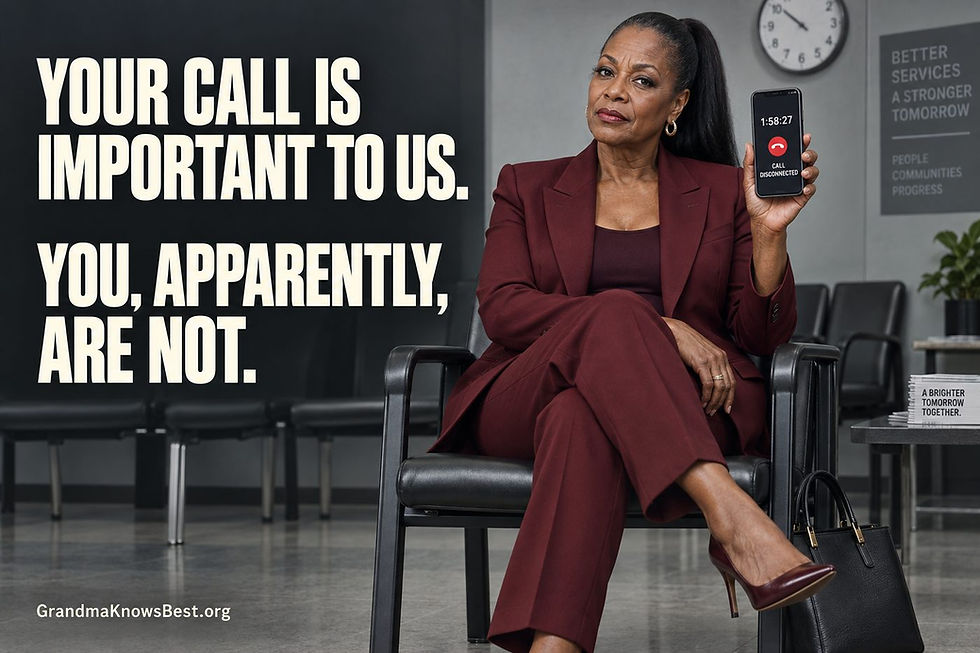
And it does not end at university. Think about workplaces. How many have entire departments for complaints about harassment, bullying, and discrimination? Then call a bank, a telephone company, or a social service agency. Before you even speak to a person, you may hear a warning about how you must treat their staff. Fair enough—nobody should be abused at work. But where is the warning about how the institution must treat you?
My bank card went missing and I spent almost two hours on the phone trying to get help. Two hours. By the time someone finally answered, I was frustrated, worried, and close to losing my temper. The response felt so casual compared with what I had just been through. Yet I was the one expected to remain perfectly pleasant. What about the way I had been treated?
Civility is not simply the absence of profanity. A person can speak politely while being dismissive, discriminatory, unhelpful, or indifferent to suffering. An institution can use perfectly professional language while imposing unreasonable burdens on someone seeking help. That does not justify threatening employees. It means that the most visibly upset person is not automatically the person who has behaved least humanely.
Politeness is not the same as humanity.
Go shopping and look around. Goods are locked behind cages. There are cameras, gates, and security people as you enter and leave. I understand that stores deal with theft and that workers deserve to be safe. But I remember when shopping did not feel quite so much like being watched on suspicion. When did the customer become somebody to distrust before they have done anything at all? And what does that constant suspicion do to how people treat one another?
That is what I mean by the architecture of distrust. It is built into the benches, the locked doors, the phone systems, the cages around merchandise, and the rules that greet us before a person does.
When inequality becomes an emergency
The COVID-19 pandemic offered another test of what we mean by protection. In Canada, Statistics Canada reported an age-standardized COVID-19 mortality rate in 2020 of 49 deaths per 100,000 among Black people, compared with 22 among non-racialized, non-Indigenous people. That was more than twice the rate. [3]
A Canadian public-health research review described how structural racism, unequal health-care access, frontline work, and housing conditions helped shape the disproportionate burden borne by Black communities. [4] These findings do not demonstrate that the pandemic was deliberately engineered to harm Black people. They do demonstrate why intentions cannot be the only measure of accountability. What happens when governments know certain communities are more vulnerable, but those communities remain less protected?
If we are to call ourselves civilized, should protection depend on how much political or economic influence a community possesses? Should an emergency reveal whose lives have quietly been considered expendable all along?
Who gets to define civilized?
The word civilization itself deserves questioning. Across history, powerful societies have called others primitive or uncivilized while engaging in colonization, enslavement, dispossession, and forced assimilation. It matters who gets to define the word, because the power to name another person uncivilized has too often accompanied the power to control them.
I am not suggesting that cruelty belongs to only one group of people. But I am asking who had the power to call other people uncivilized in the first place. Whose history became the standard? Whose behaviour was excused? Whose humanity was made into a debate?
Perhaps we have been taught to mistake obedience for civility, order for justice, and respectability for respect. Perhaps people can become highly skilled at administering the consequences of harm without becoming equally committed to preventing it.
The person on the TTC remains in my thoughts. I do not know their name, their history, or where they went after the recording ended. I know only what the comments made me ask. When we see someone with nowhere safe to sleep, do we imagine a human being in need—or a problem that should be removed from view?
For me, civilization cannot just mean wealth, laws, buildings, credentials, or the ability to keep people in line. Surely it has to mean something about how human beings treat one another—especially those with the least power.
So, are we civilized? Or have we simply become extraordinarily sophisticated at managing the consequences of our own incivility?
Sources and further reading
1. Ombudsman Toronto, Investigation into the City’s Clearing of Encampments in Summer 2021 (2023).
2. Interactions between Police and Persons Who Experience Homelessness and Mental Illness in Toronto, Canada (research study).
3. Statistics Canada, COVID-19 mortality among racialized populations in Canada and its association with income (2022).
4. Public Health Agency of Canada, COVID-19 among Black people in Canada: a scoping review (2024).


Comments